No products in the cart.: ₹0.00

By Suraj Kumar
0 Comments
The reason why your curry is not spicy is not that you didn’t use enough chili; rather, your curry is flavorless since your dhaniya powder has expired long time ago.
Powdered dhaniya makes the gravy whereas the other spices are the garnish
While powdered dhaniya forms the backbone of an Indian dish, no other ground spice can compete. Chilies add heat, turmeric gives a yellowish color and slight bitterness, and cumin provides smoky and earthy flavors. Powdered dhaniya adds all of that together to give the required substance, sweetness, and balance.
Take a look at the proportion of each ground spice used in preparing home recipes such as rajma, chole, or even a simple onion-tomato masala. While there would be a big spoon of dhaniya powder, the amount of chili powder might be only half a teaspoon at best. The proportions were certainly not by chance; cooks who have prepared such dishes for several decades know exactly how to get the right amount. It is because dhaniya powder has a gentle taste that lies in the middle of the spectrum: citrusy and slightly sweet and woody. The main volatile constituent of dhaniya is linalool, which is responsible for the smell of basil and lavender.
Conduct a simple experiment. Prepare tomato-onion masala twice using the same oil, onion, tomato, chili, turmeric, and cumin. Put two spoons of dhaniya in one pot, and leave the second without it. The one without it tastes like spicy tomato sauce – acidic and watery with heat standing above the taste. The second one tastes like a gravy. Sourness of the tomato is rounded, edges smoothed and the taste lingers in the mouth, not disappearing with the first spoon.
The texture is equally important. Coriander seeds have lots of fiber, and while cooking it expands, making gravies, dals and kadhis slightly thicker. Restaurants create this effect using cashew paste, cream and additional oil. A domestic cook will get this full bodied gravy simply by using dhaniya.
Forget about dhaniya as a supporting spice. You can skip a supporting spice and won’t feel it much. But without dhaniya, your dish will be just hot and sour.
Freshness decides quality more than brand, price, or origin
It goes bad more quickly than almost all other spices that you have in your possession. Its smell is due to volatile oils, which are released when the seeds get cracked during grinding process. A seed of the coriander will stay fresh for a year or even more. But the powder becomes bad in several weeks. If it stays in the kitchen cabinet over a period of four-six months, it would taste as sweet dust.
Just imagine a common path of the product from the moment of purchase. It was crushed in some factory, stored in a warehouse, displayed in some store window (at times with direct sunlight falling on it), and after that it got into your kitchen near the gas stove. And when you open it, it may turn out that it has stayed there for a year already.
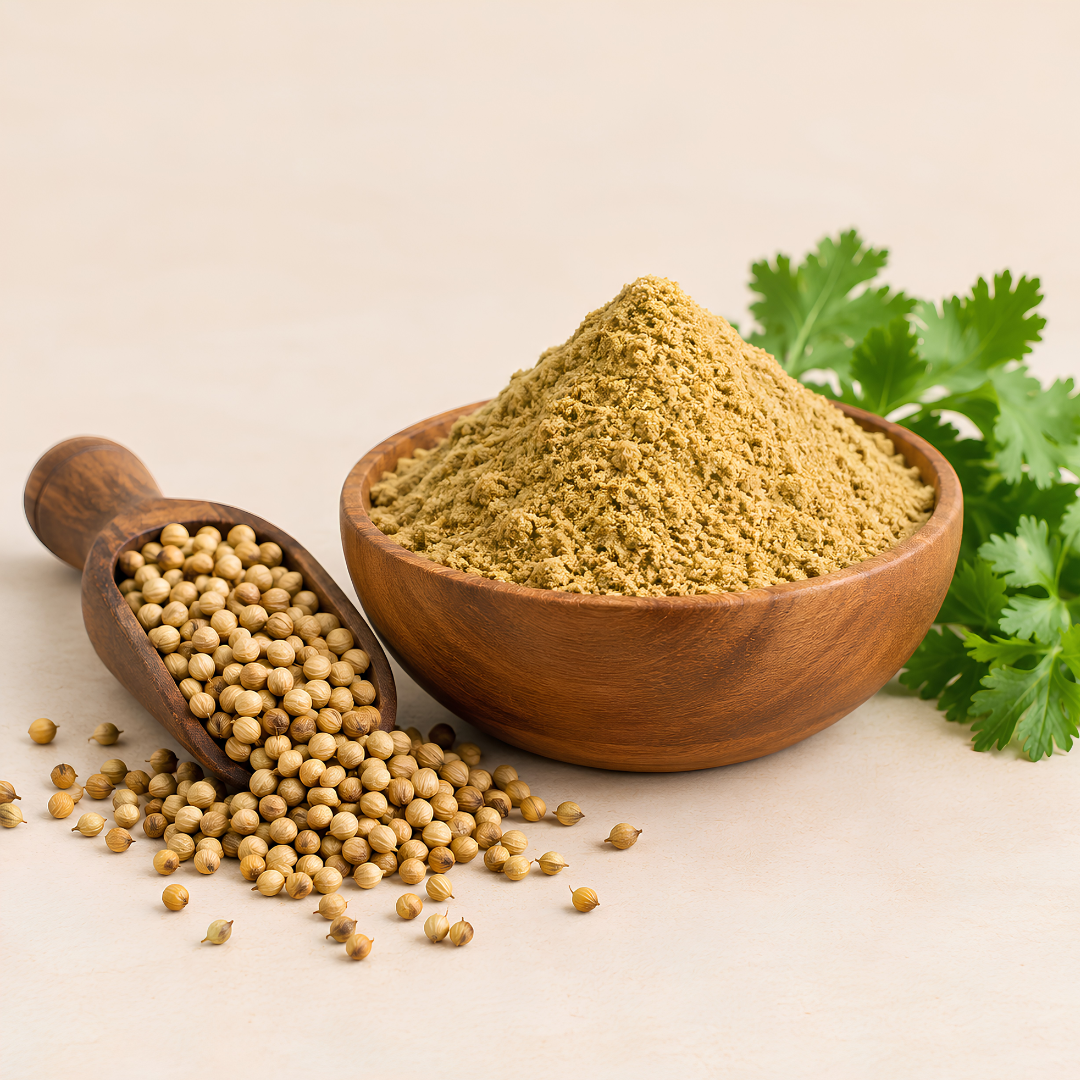
This remedy comes at very little expense, since all one needs is sabut dhaniya and grind it himself. Roast the seeds for 60 to 90 seconds in an iron pan in low heat, until the aroma of roasted dhaniya develops. Be sure not to allow the seeds to burn since over-roasted dhaniya acquires a bitter taste. Allow it to cool and grind it using a grinder. Prepare 50 grams of ground dhaniya at one go and store in an airtight glass or steel box and keep it away from the kitchen range. This amount of dhaniya powder should last for a month or more for a family of four members.
This also solves the issue of adulteration of spices since it is common knowledge that adulterated spices have been making news headlines in India several times now and some packets contained colored saw dust and powder of other substances.If the grind is not feasible, be smarter about what you buy. Go for small packages, check the date of packaging, shop in a place that has high turnover of stock, and do not pick those in clear bags kept in direct light. Then do the palm test at home: squeeze a little amount in your palms and smell. Dhaniya’s fresh aroma will fill your hand space. Otherwise, get another one.
The health benefits are real but modest, and the biggest one comes from how dhaniya changes your cooking.
This is a food item and not a drug; to pretend otherwise would be misleading about its potential. Online search for information reveals that it reduces sugar levels, reduces cholesterol, and removes toxins from the body. Most of the evidence behind this claim has been generated through in vitro experiments or animal studies or by concentrated extracts at very high dosages compared to a spoonful of the powder. These studies are fascinating but not enough reason to replace your prescription with a teaspoon of masala.
Now let’s run some numbers for a spoonful. Coriander seeds contain around 40 percent fiber, which seems impressive until you measure the quantity of a teaspoon of powder at around two grams of the powder, which means less than a gram of fiber. Same goes for other trace elements and antioxidants.
Dhaniya powder is said to have the property to enhance digestion, and this tradition has its basis. People throughout India brew this seeds in water and drink this beverage whenever a hearty meal fails to digest well. This centuries-old cooking custom is a good enough reason to continue doing it. It cannot be claimed as a remedy.
The importance lies in the way it impacts the behavior of a cook. A person who knows how to make use of dhaniya effectively does not need anything else. This ingredient provides natural body to a dish without using cream and excess fat. It balances out the sour and bitter taste making one use less salt. Just a teaspoon of ghee is enough for a dal flavored with dhaniya and cumin rather than three teaspoons required normally.
Dhaniya powder does not sting either. Chillies sting, and cumin is too strong, while dhaniya creates flavor without stinging. Therefore, dhaniya is the ideal base spice for the diets of children, the elderly with delicate stomachs, and those who enjoy tasty food that is mild in taste. Important note, if you use medicines for blood sugar and pressure, then use it in normal quantities in foods only.
Timing and ratios decide whether dhaniya works, and most cooks get both wrong
Dhaniya powder gets burnt in mere seconds, and burnt dhaniya has a bitter and bland taste. Most people throw this spice into the pan along with the chilli and turmeric, only to complain about the pungent flavor of the masala. Instead, add it once the onions have been caramelized and the tomatoes have cooked down a bit, adding some water to it. A more effective way is to make a paste of these three spices using two tablespoons of water and adding it to the masala. This not only reduces the effect of the heat but also helps in cooking till the oil starts to separate from the masala.Ratios also are important as much as timing is. A practical ratio for cooking in everyday North Indian kitchen is a mixture consisting of two parts dhaniya, one part cumin powder, and half part of chili powder, along with a little bit of turmeric powder. Gujarati kitchens use this principle to create a blend known as dhana jeeru which normally consists of about two parts of coriander mixed with one part of cumin and can be used as a spice for vegetables, dals, and farsan. South Indian sambar powder contains an even larger amount of coriander in its composition because dhaniya seeds usually form the major part of the mixture.Dhaniya in whole crushed form also has its own task. The kadhai masala employs a crushed and roasted mixture of whole coarsely powdered coriander seeds along with dry red chilies, which give the dish its unique texture and flavor. This is something fine powder cannot do since it takes time for crushed dhaniya to release its aroma and contributes to the slight crunchiness of the dish. Stock your pantry with both forms – whole seeds for crushing and powder for the daily gravy.
Even the dry preparations get benefited by dhaniya. A little sprinkle of dhaniya in the dish of bhindi or aloo gobi just before serving absorbs the extra moisture from the dish and ensures the masala sticks to the vegetables.Start from the base ratio, make one dish, and taste it. After this, adjust the ratio of dhaniya in quarter teaspoons. This is a process followed by cooks for many dishes until it’s done perfectly, and the only tool to do this task is your taste buds.
Dhaniya powder is the base of all gravies, dals, and dry vegetables in the Indian kitchen, and this is possible only when it’s fresh and is added in the cooking at the right time. With the adjustment in dhaniya, you solve almost all the problems of your cooking.