No products in the cart.: ₹0.00

By Suraj Kumar
0 Comments
The cheapest jar in your kitchen has become the most oversold medicine in India, and haldi did nothing to deserve that.
Haldi’s Real Job Is Colour and Base Flavour, Not Medicine
Haldi is the strongest colouring agent in the Indian kitchen and its quietest flavour partner. It does both jobs so well that it doesn’t need a medical career on the side.
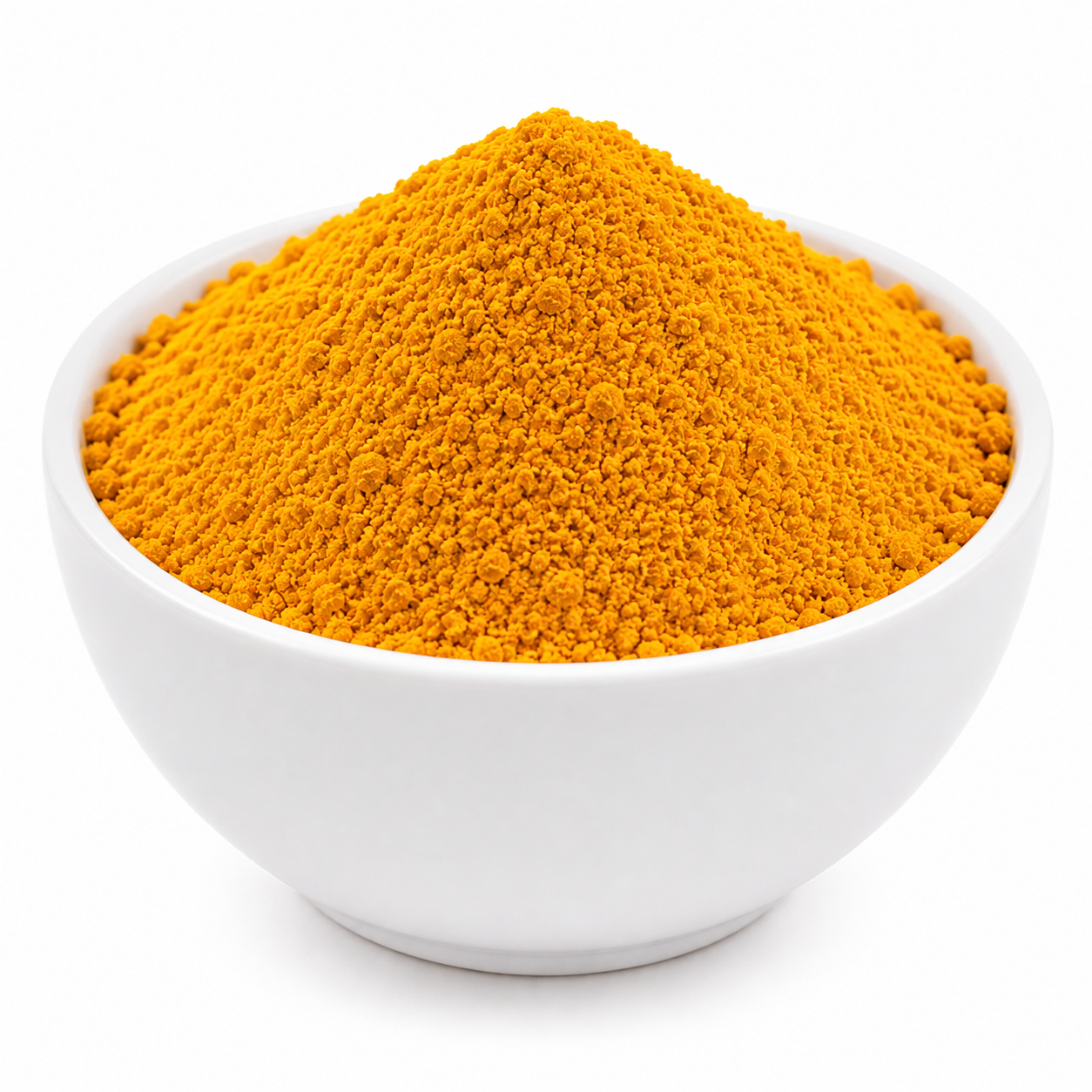
Farmers boil the rhizome, dry it, and send it to the mill. The yellow-orange colour comes from a pigment called curcumin. Ground turmeric holds only a few percent curcuminoids by weight, yet half a teaspoon turns a whole pot of dal deep gold. A dose that small producing an effect that big is the clearest proof that haldi’s first job is colour.
The flavour is mildly bitter, earthy, and faintly peppery. Taste it alone and it seems unremarkable, which is exactly its strength. turmeric doesn’t dominate any spice. It ties them together. Try this once: make your usual dal tadka without haldi. The colour turns pale, and the jeera, garlic, and green chilli poke out separately, like a band where every player solos at once. Add haldi and they start playing in tune.
Every spice in a tadka has a job. Jeera adds warmth, hing adds depth, and chilli adds heat. turmeric ‘s job is quieter: it sets the ground floor that the others stand on. Cooks who skip it often say the dish tastes “thin” or unfinished, even when they can’t name what’s missing. That thin taste is the missing base note, and one pinch fixes it.
Haldi’s colour also runs on chemistry you can use. The pigment stays yellow in neutral and acidic conditions and turns reddish-brown in alkaline ones. Add too much baking soda to your dal and it goes brick-red; a squeeze of lemon or a spoon of tamarind brings the gold back. The same reaction turns a haldi stain on your shirt red the moment soap touches it. Next time your dal colour goes wrong, check the baking soda first.
Haldi does the same colour work in fried food. Bengali and Kerala cooks rub fish with turmeric powder and salt before frying, and the golden crust owes part of its shade to it. A pinch in pakora batter deepens the gold. In both cases haldi contributes colour far more than flavour, which is one more sign of where its real value sits.
Give Haldi 30 Seconds in Oil, Not Two Seconds and Not Two Minutes
Raw turmeric powder tastes chalky, and burnt haldi tastes bitter. The window between the two is narrow, and most home cooking misses it.
Curcumin barely dissolves in water, but it dissolves well in oil and ghee. That’s why a brief bloom in fat releases both colour and aroma. Dal makes this easy: add haldi to the cooker with the water at the start, and the water protects it from burning. Sabzi and curries demand more care:
| When you add haldi | What happens |
|---|---|
| In the cooker with water, from the start | Deep colour, soft flavour. Best for dal |
| In oil on low heat, 20-30 seconds | Aroma opens up. Best for sabzi and curry |
| In smoking hot oil, before anything else | Burns fast, and the bitterness spreads through the whole dish |
| At the very end, without cooking | Chalky, raw taste |
Here’s the reliable method for sabzi. Heat the oil, add jeera and onions, and turn the flame low once the onions go golden. Add haldi, stir for 20 to 30 seconds, then pour in tomato or water right away. If the haldi darkens to brown-black and the smell turns sharp, it burned. Wash the pan and start again, because no other masala rescues burnt haldi.
Your nose works as a better timer than any clock. Raw haldi smells dusty and flat. After 20 seconds in warm oil, it smells rounder and slightly sweet, almost like roasted earth. The moment you catch that change, pour in the tomato or water. Cooks who learn this smell stop counting seconds and start cooking by instinct, and that instinct separates a good tadka from a lucky one.
The most common mistake is dropping haldi into smoking oil as the first ingredient. It darkens in two seconds there. The moisture in onions and tomatoes keeps it cool, so always pair it with something wet. In dal, skip the haldi in the final tadka, because it already dissolved in the cooker. Let the garlic, jeera, and chilli shine there. And never toast haldi in a dry pan. Without fat, it only burns.
The Health Claims Run Ahead of the Evidence, and the Real Benefit Still Counts Haldi
Haldi doodh won’t cure your arthritis, and a pinch in the kadhai won’t chase away disease. The “20 benefits of turmeric” listicles skip that part.
Look at the arithmetic. Half a teaspoon of haldi weighs about 1.5 grams, and only a few percent of that is curcumin, so roughly 30 to 70 milligrams goes into the pot. Split that across four plates and each person gets 10 to 20 milligrams. Researchers often give several hundred milligrams to several grams of curcumin in supplement form. The gap is too wide to expect a kadhai tadka to match what a trial delivers.
Absorption adds another problem, because curcumin enters the body poorly. Piperine in black pepper and the fat in oil or ghee both improve absorption, and Indian kitchens found that combination centuries ago without a lab. A tadka with oil, haldi, and pepper works on this logic. So does a glass of doodh with haldi, black pepper, and ghee.
Lab studies show that curcumin has antioxidant and anti-inflammatory properties. Large, well-designed human trials remain limited. Treat haldi as a good daily habit, not a treatment. A small amount every day is the sensible use: you collect the full colour and flavour, and the low-risk health nudge comes free.
Capsules and high-dose supplements are a different story. Some reports link turmeric supplements to liver injury. People who take blood thinners, have gallstones, or live with liver conditions should talk to a doctor before starting any supplement. Kitchen haldi doesn’t raise that worry, because the amounts are small and arrive with food. A glass of haldi doodh with a quarter teaspoon isn’t a supplement either. It’s a warm, comforting habit, and it deserves to stay one.
Buy It Right, Measure It Small, and Use It Where It Shines
Good haldi has a deep golden-orange colour, never a neon lemon-yellow. Cheap powder sometimes carries added colours such as metanil yellow, a dye that Indian food rules prohibit. If the powder looks fluorescent, put it back on the shelf. Buying whole rhizomes and grinding them at a mill you trust is the safest route, and pounding them in a khalbatta at home comes second.
Keep the quantity small. A quarter to half a teaspoon per cup of dal is enough, and the same amount covers a sabzi for four. Beyond that point, the colour deepens a little while the bitterness climbs fast. Set your measure once and resist the urge to adjust it.
Store haldi with the same care as any ground spice. The aroma fades within a few months, so buy small batches and keep them in an airtight jar, away from light and moisture.
Fresh kachi haldi arrives in winter, and it tastes brighter than the powder, gently gingery and faintly like raw mango. One inch of fresh rhizome roughly equals a teaspoon of powder. Grate it into sabzi or turn it into achar.
Here’s where haldi earns its place in a regular week:
- Dal tadka: ¼ to ½ tsp in the cooker with water. Keep the final tadka for jeera, garlic, and chilli.
- Aloo gobhi and dry sabzi: ¼ tsp in oil on low heat for 20 seconds, right after the onions.
- Kadhi: ¼ tsp whisked into the besan and dahi mix before it heats. The colour turns golden as it simmers.
- Khichdi and pulao: A pinch gives the rice a yellow tint and a light, earthy aroma.
- fresh turmerici doodh: ¼ tsp haldi, a pinch of black pepper, ½ tsp ghee, and gud or honey to taste in a glass of hot milk. A calm ritual for a cold night.
- Kachi fresh turmeric achar: Slice fresh the spice and ginger thin, mix with lemon juice, salt, and mustard oil, and leave it in the sun for a day or two.
One mistake shows up again and again: cooks add more haldi for richer colour and end up with a bitter dish. the spice has a ceiling, and the bitterness arrives well before the colour gets any deeper. Trust the small measure.
the spice is a colour-and-flavour spice that loses its real strength the moment anyone tries to turn it into medicine. The cook who blooms it in oil at the right moment, in the right amount, gives the plate a richness that no capsule can match.