No products in the cart.: ₹0.00
By Suraj Kumar
0 Comments
One pod is the dose, and every extra pod costs you
Potency defines star anise, which makes it the spice that rewards restraint and punishes a heavy hand. Trans-anethole, the compound behind its sweet, licorice-like aroma, makes up the large majority of its essential oil, and anethole tastes intense even in tiny amounts. Anise seed and fennel carry the same compound at lower intensity, so a single pod hits noticeably harder than a spoonful of either seed.
Watch how working cooks handle it. A big pot of pho broth takes three or four pods, and the cook pulls them out before the broth finishes. A family-size pot of biryani takes one or two. Nobody in a professional kitchen dumps in a handful, because past a narrow threshold the anethole swallows every other flavor and the dish tastes like cough syrup.
That threshold gives you a product rule: treat one pod per litre of liquid as the ceiling. Home cooks break it constantly. They see a beautiful eight-pointed star, they toss in five, and the dish suffers. Then they blame the spice instead of the dose. If you sell star anise, that failure lands on your brand, not on the customer.
Fix it on the pack. Print “one pod per litre” where most brands print a paragraph about heritage. That line shows the buyer how to succeed, and a buyer who succeeds reorders. A customer who ruins a curry with five pods never buys again and tells her sister why.
Potency also reshapes your value pitch. A 50-gram pack of whole pods holds dozens of pods, and each pod flavors a full pot. You do not sell a spice by weight. You sell a stack of dozens of finished dishes, and that framing supports a price that a commodity buyer would never accept for “50 grams of spice.”
Sell Whole Star anise Pods for Better
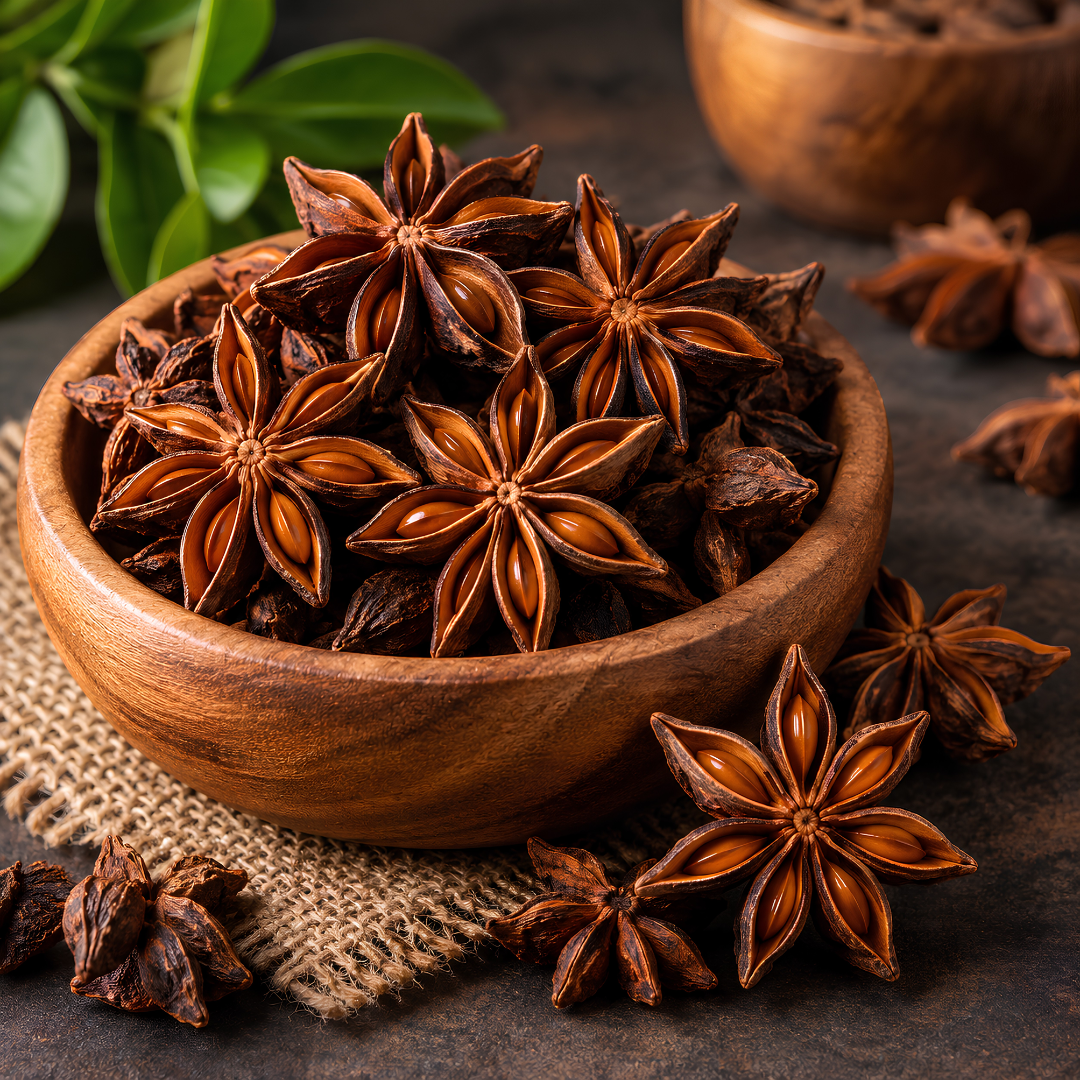
Whole star anise tells the truth, and ground star anise lies for the seller. A pod is a hard, woody star with eight points, and each point holds one glossy seed. The shell locks in the volatile oils. Grinding breaks that seal, anethole escapes into the air, and powder fades far faster on the shelf than whole pods do.
Powder also hides quality. Nobody can grade a powder by eye, so a supplier can pad it with broken pods, stems and empty shells, and the buyer never sees the trick. A whole pod lets the customer judge on sight. She checks for intact points, a rich reddish-brown color, a glossy seed in each hollow and a sweet smell the moment she opens the pack. Grade your pods by those traits and print the grade on the label. Buyers reward whatever they can inspect.
Origin still matters, but in a plain way. China and Vietnam supply most of the world’s star anise, with Guangxi in China and Lang Son in Vietnam as two major growing regions. Farmers pick the fruit before it fully ripens and dry it in the sun. You do not need a romantic origin story. You need pods with unbroken points, the right color and a fresh scent, plus a supplier who lets you inspect a sample from every lot before you commit to a container.
Follow a simple rule: sell whole pods, price the intact-point grade at a premium, and hold off on any ground version until the whole-pod line pays for itself. If customers demand powder for their masala blends, grind small batches to order and print the grind date on the pack. Grinding to order costs you convenience, but it protects the one thing your customer buys star anise for, which is aroma.
Broken pieces still have a use. Sell them in a cheaper “cooking pack” for restaurants and bulk buyers who care about flavor and ignore appearance. Do not mix them into your premium pack, ever. A single pack with a crushed pod at the bottom teaches your best customer that your grade means nothing.
Pharma made star anise volatile, so buy like a hedge trader
Star anise has a supply chain built for shocks, and the biggest shock in its history came from a flu drug. For years, the fruit served as the main commercial source of shikimic acid, the raw ingredient Roche needed to make Tamiflu. When bird flu fears in 2005 sent governments racing to stockpile the drug, demand for star anise jumped, and spice buyers watched prices climb and supplies tighten. A cooking spice suddenly competed with a pandemic stockpile. Chemists later developed other routes to shikimic acid, including fermentation, which took the pressure off the pods.
The lesson outlasts that episode. Concentrated supply means fragile pricing. Two countries grow most of the crop, so one bad harvest, one export rule or one big industrial order moves your cost overnight. A bootstrapped brand that buys on the spot market, month by month, absorbs every swing straight into its margin.
Buy the other way. Whole star anise stores well in a cool, dry, dark room, which means you can stock up when the harvest lands and supply peaks. Hold enough inventory to cover twelve months of sales. Split your purchases between two suppliers in two regions, so a problem in one province never empties your shelves. Lock in prices with forward contracts wherever a supplier agrees.
The whole-pod decision from the last section makes this strategy possible. Powder cannot sit in a warehouse for a year without fading, while pods can. A ground-only brand has to buy small and often, and it pays whatever the market charges that month. A whole-pod brand buys big and once, and it sets its own price calendar.
This approach ties up cash. The alternative ties up your margin, and a margin you lose to a price spike never comes back. Run the numbers on one bad year: if the price of your main raw material jumps sharply while your shelf price stays fixed by contracts with retailers, you pay for the spike out of your own pocket. A year of stock on the shelf turns that risk into a cost you chose in advance.
The lookalike will poison your reputation, so verify species on every lot
A toxic cousin of star anise exists, and it turns a sourcing shortcut into a safety crisis. Japanese star anise, Illicium anisatum, resembles the edible Chinese species, Illicium verum, and it contains anisatin, a neurotoxin. In 2003, health regulators in the United States warned consumers about teas that vendors marketed as star anise but that contained the Japanese species. The teas caused neurological symptoms, including seizures in infants. One adulterated batch is enough to end a small brand.
You can spot the lookalike, and you should train everyone who touches your stock to do it. Edible Chinese star anise usually has eight points, a smooth shell and a sweet licorice smell. The toxic species usually has more points, often ten to thirteen, with thinner, more curled tips and a weaker smell that lacks the sweet anise note. Lay a random handful of pods on a white tray at receiving, count the points, and smell three at random. The check takes two minutes, and it costs you nothing.
Eye checks catch sloppy mixing, but they miss subtle contamination, so add laboratory confirmation. Ask each supplier for documentation of species, and send a sample from every lot for identification and an anethole assay. The assay confirms both the species and the potency, which means one test protects your safety record and your flavor claim together.
Then turn the result into a selling point. Print a QR code on the pack that opens the report for that exact lot: species confirmed, anethole level, moisture, and the grade you assigned. Competitors who buy the cheapest pods from the cheapest trader cannot match that page without paying for the same testing, and the testing erases the price gap they depend on. A buyer choosing between two packs of pods that look identical will pay extra for the one that carries proof.
Star anise sells on restraint, not abundance: one pod, one dose, one verified species. Build the brand around that discipline, and customers will pay for the confidence that a bag of cheap pods can never give them.