No products in the cart.: ₹0.00

By Suraj Kumar
0 Comments
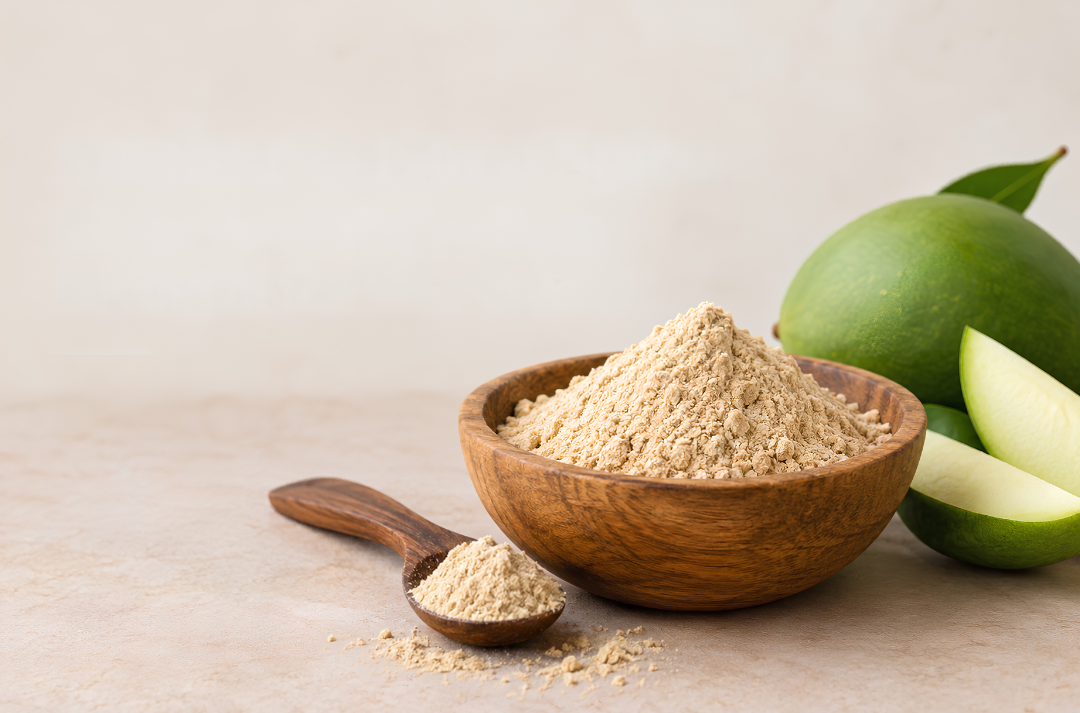
Amchur Powder is more than just a souring ingredient… next to sumac and asafoetida, and that single filing decision has cost the ingredient its rightful place on the counter. Amchur — dried, ground green mango — doesn’t behave like a spice. It behaves like an acid. Chefs reach for lemon juice or vinegar to brighten a dish, and both of those choices add liquid, dilute a sauce, or throw off a marinade’s texture. Amchur delivers the same tartness in powder form, with none of the moisture penalty. Treating it as a decorative garnish spice instead of a core acidifying agent is why home cooks underuse it and why most spice brands underprice it. This article makes the case that premiumAmchur Powder deserves a spot next to salt and pepper, not buried in a “world foods” endcap.Discover how amchur powder adds natural tanginess to Indian dishes, dry rubs, chutneys and spice blends without adding extra moisture
The Industry Mislabels It, and the Mislabeling Kills Its Value
Walk into any specialty grocery store and amchur sits in the ethnic-food section, priced like turmeric or coriander — a dollar-or-two commodity spice bought in small jars and used a pinch at a time. That pricing model assumes Amchur Powder functions the way paprika or cumin function: as a flavor accent, used sparingly, replaceable by a dozen other spices in a pinch. But amchur isn’t replaceable in the same way. Nothing else on a standard spice rack delivers concentrated citric and malic acid in dry form. Citric acid powder exists, but it’s a single-note chemical sourness; amchur carries fruit sugars, tannins, and a mild vegetal depth alongside the tartness, which is why Indian cooks have used it for centuries to season lentils, chutneys, and pickles instead of reaching for plain acid.
This mismatch between function and shelf placement means brands are leaving money on the table. A product that can replace lemon juice, vinegar, or citric acid in dry rubs, spice blends, and shelf-stable packaged foods has industrial utility far beyond a pinch-per-recipe spice jar. Compare it to how the food industry treats freeze-dried citrus powders, which get marketed and priced as functional ingredients for snack seasoning and beverage mixes, commanding a premium because manufacturers understand what they’re buying: a stable, shippable, long-shelf-life acid. Amchur does the same job, often cheaper to produce, and it’s still priced like a garnish. Any brand that repositions premium mango powder as a functional acid ingredient — not a spice — has room to charge more and sell into categories the current packaging never touches: snack seasoning, dry rub manufacturing, instant soup mixes, and shelf-stable sauce bases.
Cooks Underuse It Because They Think “Sour,” Not “Structure”
Ask a home cook what amchur does, and the honest answer is usually “it makes things sour,” which is true but incomplete in a way that limits how the ingredient gets used. Sourness is a flavor descriptor. Structure is a technical one, and it’s the more useful lens. In a marinade, liquid acid like lime juice starts breaking down proteins the moment it touches meat, and if you walk away for two hours, you get mush instead of tenderness. Amchur Powder, applied dry, releases its acidity more gradually as the food’s own moisture activates it, giving a cook more control over the tenderizing timeline without the risk of over-marinating. That’s not a minor convenience — it’s the difference between a tikka that holds its shape on the grill and one that falls apart on the skewer.
The same structural logic applies to dry spice blends and rubs. Add lemon juice to a dry rub and you’ve made a paste, which changes how it adheres to meat, how it browns, and how long it stores. Add amchur instead, and the rub stays dry, shelf-stable, and pourable, while still delivering the tang that makes a rub taste finished rather than flat. Chaat masala is the clearest proof of this: its entire identity depends on amchur providing brightness in a completely dry format, something no liquid acid could replicate without turning the blend into a slurry. Cooks who understand amchur only as “the sour spice” are missing that its real value is dry-format acid delivery — a category most Western kitchens don’t even have a name for, let alone a go-to ingredient.
Quality Variance in Amchur Is Wildly Underreported, and It Should Be a Buying Criterion
Turmeric, cumin, and coriander all have well-known quality tiers that consumers have been trained to look for — curcumin content, essential oil percentage, freshness of grind. Amchur has none of that consumer education, despite having just as much quality variance. Green mangoes harvested too ripe produce a powder with dulled acidity and a flat, dusty flavor. Mangoes dried too quickly at high heat lose the volatile compounds that give good amchur its faint fruity aroma underneath the sourness. Powder ground too fine oxidizes faster and turns bitter within months; powder ground coarser and stored properly holds its punch for over a year. None of this makes it onto packaging, and almost no brand markets around it, which means consumers are buying blind on an ingredient with real, tasteable quality tiers.
This is a gap, not a dead end. Wine, olive oil, and even honey all went through the same transition, moving from undifferentiated commodity products to categories where sourcing, harvest timing, and processing method became selling points that justified premium pricing. Amchur is positioned for the identical shift. A brand that discloses mango varietal, harvest window, and drying method — the way a good olive oil label discloses press date and region — isn’t just adding marketing flourish. It’s giving buyers a real reason to pay three times the commodity price for a product that performs measurably better in a kitchen. The brands that get there first will define the category the way a handful of olive oil importers defined “extra virgin” as a meaningful term instead of a marketing word.
It Solves a Problem the Health-Conscious Kitchen Doesn’t Know It Has
Sodium reduction is one of the most persistent goals in home and commercial cooking, and one of the most persistent obstacles to it is that salt does more than season — it also carries and rounds out flavor, which is why low-sodium food so often tastes flat instead of just less salty. Acid is the most effective tool for compensating, because a hit of tartness can make a dish taste “seasoned” even when the sodium content drops. Bartenders and chefs already exploit this; a squeeze of lime does more to fix an under-salted dish than another shake of the salt shaker. The catch is that liquid acid isn’t practical in dry packaged foods, shelf-stable products, or anything that needs a long pantry life, which is exactly the category where sodium reduction matters most for public health.
Amchur Powder solves this without the tradeoffs. It can go directly into a spice blend, a dry soup base, a snack seasoning, or a packaged meal kit, delivering the same flavor-rounding acidity that salt reduction otherwise sacrifices, with no liquid to manage and no shelf-life penalty. Food manufacturers already chasing sodium-reduction targets for regulatory or health-marketing reasons are, in most cases, unaware this ingredient exists as an option outside Indian and South Asian aisles. That’s a formulation opportunity sitting in plain sight, and the first packaged food brands to market a product as “seasoned with mango, not extra salt” will own a health claim their competitors haven’t thought to make.
PremiumAmchur Powder isn’t a niche spice waiting for a bigger audience — it’s a functional acid ingredient hiding inside spice-aisle packaging and commodity pricing. The businesses and cooks who start treating it that way, rather than as a pinch-of-flavor afterthought, will get more out of it than everyone still filing it next to the paprika.