No products in the cart.: ₹0.00

By Suraj Kumar
0 Comments
Stop telling readers to “add a pinch of hing for flavor.” That instruction skips the one step that actually makes asafoetida work, and it’s why so many home cooks think hing tastes like nothing or, worse, tastes like raw sulfur in their finished dal.
Raw Asafoetida Isn’t an Ingredient — It’s an Unfinished One
Asafoetida in its raw, unactivated state smells aggressively of sulfur compounds, and that smell doesn’t mellow on its own sitting in a jar. The pungent, almost unpleasant odor comes from sulfur-containing compounds in the dried resin, and those compounds only transform into the savory, umami-adjacent flavor hing is known for when they hit hot oil or ghee. This is a genuine chemical conversion, not a subjective “it tastes better cooked” preference — heat breaks down the raw sulfur compounds into different aromatic molecules that read as deep and savory instead of sharp and chemical.
This is why a recipe that says “add a pinch of hing along with your other spices” without specifying it needs 10-15 seconds in hot oil before anything else touches the pan is giving incomplete instructions. Compare it to raw garlic versus roasted garlic — garlic doesn’t need heat to be edible, it just tastes different. Hing does need heat to become what it’s supposed to be. Skip that step and add it directly into a simmering dal or a room-temperature marinade, and a reader gets exactly the raw, medicinal edge that makes people say they hate asafoetida. A blogger who explains this distinction is explaining the entire reason some readers think hing “ruins” a dish, while others build their whole tempering technique around it.
The Dosage Math in Most Recipes Is Dangerously Loose
“A pinch of hing” is not a unit of measurement, and treating it like one causes two opposite failures depending on which way a reader misjudges it. Too little, and the compound never registers — hing’s flavor contribution is potent but narrow, so an insufficient amount just disappears under garlic, cumin, or chili. Too much, and the dish turns bitter and acrid, because the same sulfur compounds that mellow into umami at the right concentration turn harsh and medicinal past a certain threshold. There’s no gradual scaling here the way there is with salt, where slightly-too-much is recoverable. Hing has a narrow window, and most recipe content doesn’t communicate that a rounded 1/8 teaspoon in a pot serving four people is already near the top of that window for most dishes.
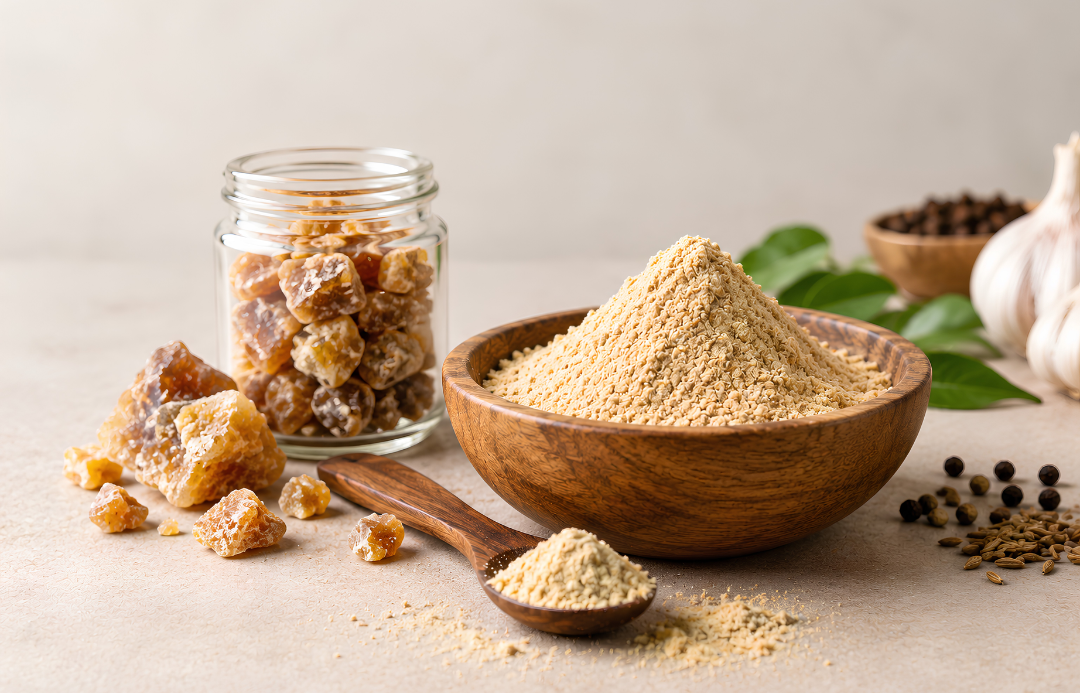
This matters even more because commercial hing sold in stores isn’t pure resin — it’s typically a compound of 15-30% asafoetida resin mixed with rice flour or wheat flour as a filler, specifically because pure resin is too potent and too hard to dose accurately for home cooking. This detail changes two things a recipe writer should be telling readers directly. First, potency varies wildly between brands depending on the resin percentage and how fresh the batch is, so a “pinch” from one jar and a “pinch” from another can differ by a meaningful margin, which is a big part of why the same recipe tastes different across two kitchens. Second, and this is the part almost no blog post mentions: wheat flour as a filler means most commercial hing is not gluten-free, a fact that matters enormously to a growing segment of recipe-blog readers who assume a spice is automatically safe and get caught out only after cross-contamination symptoms show up. A recipe writer serving a gluten-free audience who doesn’t flag this is publishing a genuine safety gap, not a minor omission.
Hing Is Doing a Specific Job That Onion and Garlic Cannot Fully Replace
Framing hing purely as “the onion-garlic substitute for Jain and Satvik cooking” undersells what it actually contributes and sets readers up to be disappointed when it doesn’t taste like onion and garlic, because it was never trying to. Onion and garlic bring sweetness, body, and a base note built through caramelization over time. Hing brings a sharp umami hit and a digestive, slightly funky depth that’s closer to what fish sauce or fermented black beans do in other cuisines than anything alliums provide. A dal cooked with hing instead of onion-garlic isn’t a lesser version of a dal that “should” have onion and garlic — it’s a differently constructed dish that leans on a completely different flavor compound to hit savory depth.
This distinction has a practical payoff for recipe writers: hing is genuinely useful even in dishes that already contain onion and garlic, because it’s contributing something those aromatics don’t — which is exactly why traditional South Indian tempering (tadka) so often includes both garlic and a pinch of hing in the same hot oil rather than treating them as either/or. A recipe blog that only mentions hing in the context of “onion-garlic-free” recipes is missing the far larger and more common use case, which is hing as a flavor-layering tool in ordinary tempering, right alongside mustard seeds and curry leaves. Recategorizing hing this way in a post — not as a substitute ingredient but as a standing member of the tempering toolkit — opens up an entire category of recipes and search queries that a “Jain substitute” framing never reaches.
Storage Failures With Hing Are Worse Than With Most Spices, and Most Guides Undersell It
Hing’s potency doesn’t degrade gracefully the way, say, dried oregano does — it degrades in a way that specifically ruins the tempering step it’s meant for. Because hing is hygroscopic and its active compounds are volatile, an improperly sealed jar left in a humid kitchen doesn’t just get weaker over months, it clumps into a solid mass that’s difficult to measure accurately and that releases its aroma unevenly when it finally hits the oil. A reader following a recipe that assumes a fresh, loose powder will either underdose because they can’t break the clump apart evenly, or dump in an oversized chunk when it finally gives way, hitting the harsh, bitter side of that narrow flavor window discussed earlier.
The more specific problem most blog storage sections miss entirely: hing’s smell is aggressive enough to permeate plastic and cross-contaminate other spices stored nearby, which is why traditional kitchens store it in a dedicated small airtight tin or a double-sealed container, never loose in a spice drawer next to turmeric or cumin. A generic “store in a cool, dry, airtight container” line, copy-pasted from a template that applies equally to paprika, misses this cross-contamination risk completely and leaves out the one storage detail that’s actually unique to this ingredient. A blogger who specifies a dedicated container, kept away from humidity and away from other spice jars, is solving a problem specific to hing that a generic storage paragraph never addresses.
Asafoetida isn’t a background seasoning you add and forget — it’s an ingredient with a genuine activation step, a narrow effective dosage, and storage needs unlike anything else in the spice rack. Recipe content that treats it as just another pinch-and-stir spice is why so many readers either skip it entirely or use it badly, and getting these specifics right is what actually earns the search traffic and trust that generic “hing 101” posts leave on the table.