No products in the cart.: ₹0.00

By Suraj Kumar
0 Comments
Stop writing “or substitute with onion powder” in your recipe cards. That single line is quietly training your readers to think onion powder is a lesser cousin of fresh onion, and it’s costing you credibility with anyone who actually cooks from your site.
The 1:1 Substitution Advice Is Technically Wrong
Fresh onion and onion powder don’t share a flavor mechanism, so no ratio fixes the mismatch. Fresh onion releases flavor through enzymatic reactions that happen when you cut the cell walls — that’s where the sharp, sulfurous bite comes from, and it changes as the onion cooks, mellowing into sweetness over 20-30 minutes of sautéing. Onion powder skips all of that. It’s dehydrated onion, ground fine, and its flavor compounds are already stable and concentrated before it ever hits your pan. There’s no raw bite to cook out and no caramelization curve to manage.
When a recipe writer tells readers “1 teaspoon onion powder equals 1/4 cup diced onion,” they’re matching a rough flavor intensity, not a cooking behavior. That’s why readers report gritty texture, uneven distribution, or a flat, one-note onion flavor when they follow that swap in a braise or a soup — the powder never had the chance to build the same layered flavor fresh onion builds through the Maillard reaction and moisture loss. Take a French onion soup base as an example: the entire dish depends on 45 minutes of slow caramelization that converts onion’s sugars into deep, brown, almost meaty notes. Onion powder cannot replicate that transformation because it has no structure left to break down — the water and cell walls that make caramelization possible are already gone. A reader who dumps in powder expecting the same result will get a thin, flat soup and blame the recipe, not the substitution logic.
If you write recipes for a living, this distinction is content, not trivia. It’s the difference between a comment section full of “this didn’t taste like the photo” and one full of people trusting your instructions. Publishing an accurate explanation of why powder and fresh onion aren’t interchangeable does more for reader trust than any number of styled photos.
Onion Powder Wins in Exactly the Places Fresh Onion Fails
Dry rubs, batters, and spice blends need what fresh onion cannot deliver: even distribution and zero added moisture. Try folding minced onion into a dry rub for ribs and you get clumping, uneven coverage, and pockets of raw onion that burn before the meat finishes cooking. Onion powder disperses through a spice blend the same way salt does — uniformly, at a microscopic scale — so every bite of a rub-coated chicken thigh tastes the same.
The same logic applies to dredges and batters. Add wet minced onion to a flour coating for fried chicken and you introduce moisture that ruins the crust; add onion powder and you get flavor without sabotaging the fry. Jerky marinades and dry cures follow the same rule — any moisture from fresh onion extends drying time and creates a food-safety risk in home dehydrators, while onion powder adds flavor with no water activity penalty at all.
This isn’t a workaround for when fresh onion is unavailable — it’s the correct tool for a specific job, the way you’d reach for cornstarch instead of flour when you need a glassy sauce, or baking soda instead of baking powder when you need a faster rise. Recipe writers who frame onion powder purely as an emergency substitute are hiding its actual competitive advantage from their own readers, and that’s a missed opportunity to explain why a recipe works. Consider a homemade ranch seasoning blend: fresh onion would spoil the shelf-stable mix within days and introduce moisture that clumps every other spice in the jar. Onion powder is the only version of “onion” that belongs in that recipe at all — not a substitute, the actual correct ingredient. Framing it that way in a blog post signals technical competence that a generic “you can also use onion powder” note never will.
Storage Advice in Most Recipe Blogs Undersells How Fast Onion Powder Dies
A jar of onion powder past 12 months isn’t dangerous, but it’s often flavorless, and most “storage guide” content buries this fact under generic “store in a cool, dry place” filler. Onion powder loses potency through oxidation and volatile compound breakdown, and heat from a stove-adjacent spice rack accelerates that loss dramatically — a jar kept near a range can lose noticeable strength in 6-8 months instead of the 2-3 years bloggers casually promise.
Humidity compounds the problem in a way most storage guides skip entirely. Onion powder is hygroscopic, meaning it pulls moisture from the air, and any exposure to steam from a stovetop or a damp spoon causes clumping that isn’t just a texture issue — clumped powder means the reader is no longer measuring an accurate teaspoon, they’re measuring a dense chunk that under-delivers flavor per volume. A reader scooping from a clumped jar with a damp measuring spoon is compounding two separate storage failures into one under-seasoned dish, and no recipe card can fix that after the fact.
The fix worth publishing is specific, not generic: store it in an airtight container away from heat and light, ideally in a cabinet rather than a rack mounted above the stove, and do the sniff test before using it in anything important. Fresh onion powder smells sharp and slightly sweet; stale onion powder smells like cardboard or nothing at all. Buying in smaller quantities also matters more than most storage guides admit — a bulk 5-pound bag purchased for a home kitchen will lose potency across the back half of the container long before it’s used up, so a smaller jar replaced every 6-9 months delivers more consistent flavor than a large one that sits for two years. If a recipe calls for two teaspoons and a reader’s jar is a year old and kept next to the oven, the dish will taste under-seasoned no matter how precisely they measured, and that’s a support-ticket-generating problem entirely within a content creator’s power to prevent with one accurate paragraph instead of a copy-pasted storage cliché.
Treating Onion Powder as a Precision Tool Changes What You Should Tell Readers to Buy
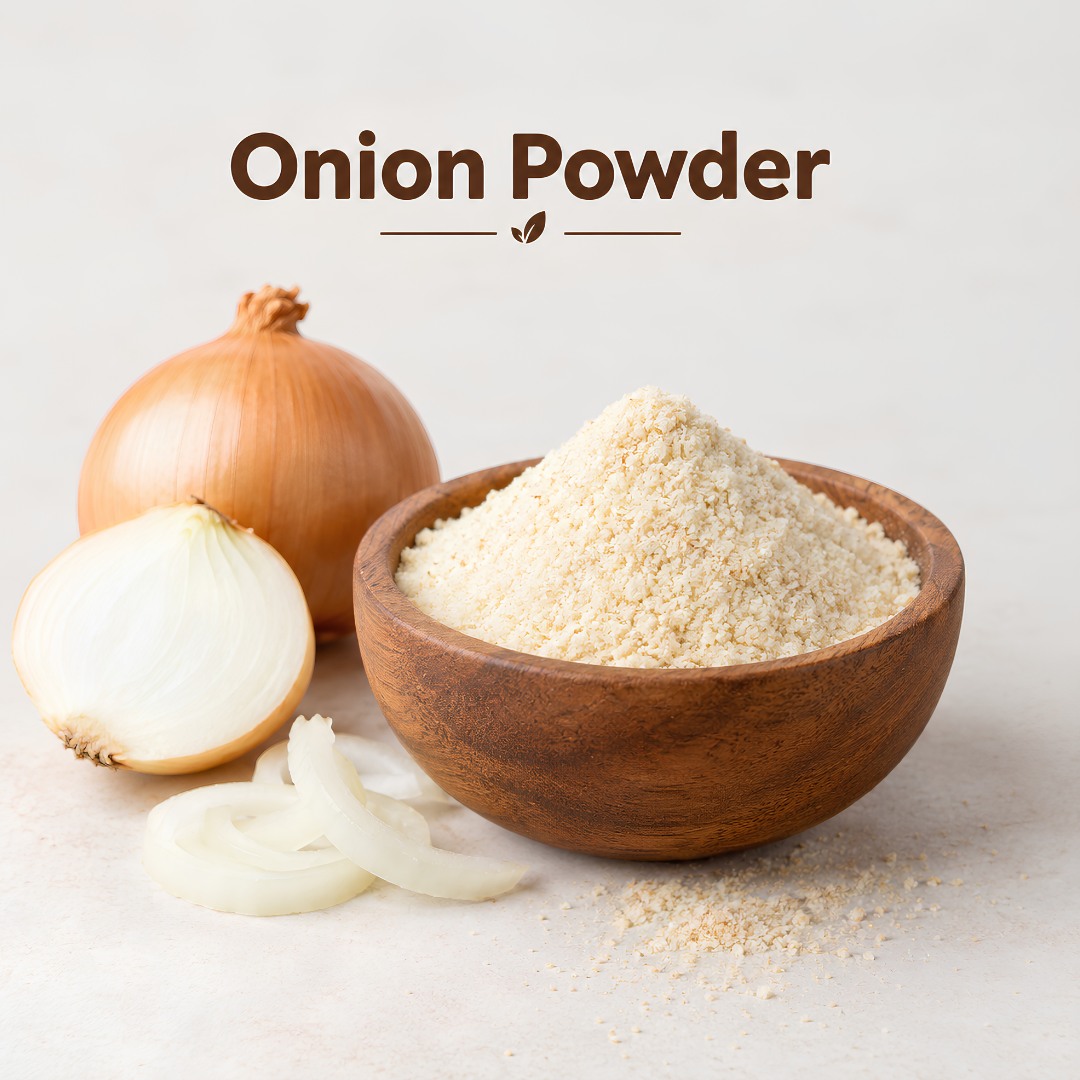
Not all onion powder is the same product, and recipe content rarely says so. Granulated onion, onion powder, and onion salt get used interchangeably in comment sections and even in some published recipes, but they behave differently — granulated onion has a coarser texture and slower flavor release, onion powder is fine and disperses fast, and onion salt is diluted with sodium and throws off a dish’s salt balance if a reader swaps it in without adjusting.
This distinction has real consequences in baked goods and dry rubs where salt levels are already calibrated. A reader who substitutes onion salt for onion powder in a 2-teaspoon quantity without reducing other salt in the recipe can push a dish noticeably over-salted, and they’ll have no idea why, because the ingredient list looked close enough. A recipe writer who specifies “fine onion powder, not onion salt or onion granules” in an ingredient list prevents a real failure mode, not a hypothetical one — and it costs one extra clause in the ingredient list to say it.
This also matters for search intent. Someone typing “onion powder substitute,” “onion powder vs granulated onion,” or “can I use onion salt instead of onion powder” is trying to solve a specific technical problem, not looking for a general overview. Generic content that lists “uses, benefits, and storage” without addressing product differences leaves that search intent unsatisfied, and readers bounce to a competitor’s post that actually answers the question they typed. The bloggers who win that traffic long-term are the ones who treat onion powder like a distinct ingredient with its own rules, its own product variants, and its own failure modes — not a placeholder for “onion, but shelf-stable.”
Onion powder isn’t fresh onion’s understudy — it’s a separate tool with its own mechanics, its own best use cases, and its own failure modes. Recipe writers who explain it that way, instead of hedging with “or substitute with,” will produce content that actually helps people cook better and ranks for the exact questions readers are already asking.